Discarded branches
ripped from wind-whipped trees litter
the deserted park

Discarded branches
ripped from wind-whipped trees litter
the deserted park
Dunkirk NY – Well, that didn’t take long.
Last week I received my copy of frogpond, which is the thrice-yearly publication of haiku by the Haiku Society of America. The arrival of the journal piqued my interest, and so I went over to HSA’s website to review the submission guidelines. I came across Guideline #2, which reads as follows:
2. All submissions must be original, unpublished work that is not under consideration by a print or web-based journal. While posts on Internet sites such as Facebook or Twitter are eligible, posts on blogs are not.
Since I am currently involved in National Haiku Writing Month, it struck me that any haiku I might write and publish on this blog would become ineligible for publication in frogpond. However, the haiku of those participating via Facebook or Twitter would remain eligible for publication. This struck me as inconsistent, to put it politely, so I wrote to the editor of frogpond for some clarification as to why this distinction existed.
The editor’s response was that haiku posted on Facebook or Twitter were “only available to friends or followers” while haiku on blogs were “open to the public” and therefore considered to be published. Since I found this answer to be inconsistent as well, I pressed the editor a bit, pointing out that Facebook is only private when a user changes their settings from “Public” (the default) to any other private setting, and that FB and Twitter can be just as public as any other internet platform. The editor was patient with me, offering more clarification, but of course the guideline is not going to change because some newbie points out an inconsistency. The position of the HSA is that haiku published on a blog like this one cannot be considered for publication in frogpond, while haiku published on Facebook and Twitter remain eligible for publication.
So I find myself already in opposition to a particular position of an organization which I’ve just recently joined. Now I have to make a decision as to whether or not to continue to publish haiku on my blog. Perhaps other journals are equally resistant to accepting haiku published on a website, and this is not unique to frogpond or the HSA. So I think I will spend some time publishing here an essay on why, in my opinion, this distinction is discriminatory, and also why I think it really shouldn’t matter at all, being a leftover from 20th century ideas about publication.
Some context is in order before I begin. Being a retired academic, I spent my working career in a “publish or perish” environment. As a performing artist, I had to fight to get non-artistic colleagues to accept that my public performances were the equivalent of a publication (“but where are your publications?”). I spent many years fighting against this mentality, taking the position that good teaching was far more valuable in terms of determining the value of a professor than the number of publications they had. It was very difficult for me to accept the notion that, somehow, being published in some obscure academic journal read only by others in the profession was an important requirement for gaining tenure. This “publish or perish” mentality in higher education is a scar on the landscape, and its significance is way out of proportion to its relevance. This personal bias probably informs to a large extent my views on what constitutes “publication.”
To cut to the chase – any platform on the internet can be made to be as public as anyone wants it to be, and the distinction between FB/Twitter as being available “only to friends or followers” while blogs are “open to the public” is simply not factual. Anyone who sets their privacy settings on FB/Twitter to “Public” has a public presence on the internet that anyone with or without a FB account can see. To argue the reverse – I can lock down this blog (which is pretty locked down already) so that only subscribers to this blog can see it. Would that be the equivalent of “only friends or followers” on FB, and thus make the haiku posted here eligible for publication?
Then there is the question of intent. Why is a FB/Twitter account assumed to be personal, while a blog is not? I think this indicates a poor understanding of what the internet is about. The problem is that, since any internet platform can be used for a myriad of purposes, judging its intent is completely subjective. To draw some sort of definitive line and treat it as if it were an objective reality is rather ludicrous at this point in time. You can, I suppose, go ahead and do that, but you should realize it’s a method of exclusion and not inclusion. You are only asking for trouble when you include one form of internet publication and exclude another by assuming intent.
Personally, my intent is not to use my blog as a publishing platform. If that were my intent, I certainly would not have it as locked down as a I do. I would allow comments, use Google Analytics, allow it to be searched, increase my SEO presence, and use other means to generate views were that the case. Facebook and Twitter quite often are used as public publishing platforms, and it’s only because of all the personal data abuses and leaks that FB has experienced that people have become more concerned about keeping their information more private. I mean, if you get on any internet platform at all for any reason, you’re probably interested in someone somewhere reading your work.
I think one has to realize that the internet is a place where people now go to draw attention to their work and talent, and not exclusively to self-publish. It’s a stepping-stone someone can take to bring attention to their work that they might otherwise not get. It’s an avenue that did not exist 30 years ago. When an organization like HSA takes a position that it will not accept haiku published on blogs or any other sort of digital platform, I think what it’s really doing is trying to prop up and defend a mindset that was in existence 30 years ago. I’d also think that this approach would be discouraging to younger people interested in the form. If I were a millennial who came across this particular submission guideline, I guess my response would be “OK, Boomer.”
This mindset was also something that plagued academia in the early days of the internet – was a digital journal really a legitimate journal? I had something published in a very early digital journal, and my colleagues questioned whether or not it should count as a “publication.” Despite the fact that I could demonstrate that the editors were legitimate leaders in the field, and that the journal was peer-reviewed in the same manner as a printed journal, it was still a fight to get it accepted. I even remember a time when colleagues would not accept student papers that were printed by a dot matrix printer – it had to be typewritten! Today, since most journals now have digital and printed versions, no one really questions this much at all.
Another point to consider is the actual business model of the platforms in question. At one time I had both Facebook and Twitter accounts, as well as LinkedIn, because they became a professional necessity. Once I retired, I closed down all my social media accounts. Like many others, at first I had a very benign approach to the platforms, and enjoyed the experience of being able to keep up with family, friends, and former students. However, as I became more aware of the business model employed by these companies, which is essentially that they steal your personal data in an attempt to monetize it for their profit, and otherwise try to influence your behavior, I realized it was imperative to protect my privacy to the extent that I could, and rid myself of this unwanted invasion. The writings of Jaron Lanier were very influential in my decision, and I continue to make efforts to resist “surveillance capitalism.” It is strange to me that the HSA is more willing to accept haiku which might appear on these data-stealing, privacy-invading platforms (which more and more people are advising you to delete or at least minimize from your life) than from a personal blog that does not participate is such questionable practices.
Lastly, I think this issue points to a certain preciousness about the material. What does it really matter where and how a haiku gets published? If my haiku is good, why would it matter to HSA or any other venue that it first appeared on my blog? Wouldn’t they want to share good haiku with their readers who might not be aware of my blog? What is this preciousness about where a haiku first appears or is published? I confess I just don’t get it. Again, it sort of has the feel of exclusivity about it. As long as the haiku is properly attributed to its author, I would think that where and how it was first published would be a rather insignificant detail. We are living in a time where exclusivity of any sort is under close scrutiny. One would think that a more open approach to haiku publication would encourage more diversity and reduce the appearance of the HSA looking like some sort of exclusive club.
I’d be more understanding if there were significant sums of money involved. Publication rights can be a big deal when it comes to compensation for your artistic work. But as far as I know, there really isn’t any big money in writing haiku. I imagine some people make some money through publication of their work, but I can’t imagine it’s enough to make a living. I’ve toyed with the notion of self-publishing my own haiku through Amazon Kindle and charging $1.99 or so for the book, but I would not expect to make very much money from such an effort. Perhaps this lack of preciousness on my part comes from a lifetime of making little money as a professional actor. According to the data, something like 90% of all the money in the entertainment business spent on performers is made by 8% of the talent pool in this country. As far as I can tell, no one is making any great fortune as a writer of haiku. It seems to be populated by well-intended people looking for some meaning, quiet meditation, and perhaps a bit more solitude in their lives, and sharing that search with others through their haiku; not with people interested in becoming famous or rich.
So it seems I am at a crossroad. My choices appear to be:
I’m going to take the rest of the day to think about it. In the larger scheme of things, any decision I make won’t matter much. Whether or not any of my haiku get published anywhere is of little consequence to me, although it would be a nice affirmation that I might be on the right track. And NHWM is an arbitrary, made-up event rather like Sweethearts Day or some other created holiday that has the tendency to create a false sense of obligation among a certain demographic (like haiku writers). Right now, a shower and breakfast seem to be in order. -twl
Mucking through thick mud
for the quietest space to
listen to the waves.

Dunkirk NY – I’ve been alive for every Super Bowl, and I believe the only two I missed were the first and the second (I did see the Ice Bowl, so I know at least I was watching football at that age). I’ve seen all the others, although the memories for each SB are a bit spotty. But last night, I think I watched my last one. The Super Bowl has become an over-the-top disaster, and at this point there is so much overblown and over-hyped content that watching the game has become more of an effort to avoid the hype rather than enjoy a game.
The game itself was actually pretty good. I thought the teams were evenly matched, with two young and talented QBs at the helm. Kansas City staged a great comeback to win the game in the 4th quarter, and as games go, you couldn’t ask for much more. I found myself enjoying the game as it was being played. I had no particular favorite going in, and as each team grabbed the lead, I became a “fan” of that team. The final really hinged on the interceptions made by both teams that led to points. If all I had to focus on was the game, I would have said I had a good time.
Try as I might, though, I could not avoid the continual bombardment of hype and hypocrisy that are the TV commercial and so-called public service announcements. I watched none of the pre-game, none of the half-time show (choosing to gorge on some local take-out BBQ ribs and shrimp), and little of the post-game show. My attempt was to try and concentrate on the game itself. Were there not commercials between action breaks, I might have succeeded. But even with all that avoidance, the sheer weight of they hype became too much. Continue reading →
midwinter morning;
light snowfall settles upon
the groundhog’s shadow
at Three Deer Junction:
Mama sniffs, perks ears, a step –
We stand still, eyes locked.
Dunkirk NY – And so begins National Haiku Writing Month. Along with the above haiku, I am going to be so bold as to expand my thoughts a little more on why we should not fear, but rather embrace, 5-7-5 haiku. You can see my original post here on Medium.
As a preamble, let me state that I am not writing against anything, nor am I writing to express the superiority of one form over another. Free form haiku, with its emphasis on minimal syllables, is a fine form of haiku writing, and without doubt many beautiful haiku result from its use. I merely wish to argue for a better view and acceptance of the 5-7-5 form, and to put a fresh slant on such haiku by claiming the form as a specifically English language form of haiku, without reference to its Japanese origins. I certainly wouldn’t stop anyone from writing free form haiku, and my hope is that haiku writers will perhaps embrace the challenges that 5-7-5 presents and raise it to another level.
The crux of my argument lies primarily in moving away from comparing the two languages – English and Japanese – and focusing on English itself as a language rich in poetic potential for haiku or any other form of poetry. It is unfortunate in some ways that the discussion has centered on comparing on to syllables. This has been a huge distraction, and I think takes away from really seeing English for the language it is. Secondarily, I think the 5-7-5 form provides just that – a form – and I believe that adding the element of form and technique offers an additional challenge to the writing of haiku.
I’ve spent my adult life working with the works of William Shakespeare. He is recognized as one of the world’s great poets and playwrights, and the consensus is that he’s the greatest poet/playwright of the English language. He contributed enormously to the language itself, giving it many new words and phrases, and in his time revolutionized the art of playwriting, raising it to a level not seen before or since. I use his sense of style and language as a jumping-off point for how I look at 5-7-5 haiku. His most important contribution to the world of playwriting and poetry was his extensive use of blank verse, otherwise know as iambic pentameter. His lines of verse in his plays and poems, for the most part, consisted of 10 syllables in the form of unstress/STRESS (an iamb). Five feet – or instances – of iambs equaled one line of poetry; hence iambic pentameter. Shakespeare also was not concerned about rhymes, and so unrhymed iambic pentameter became known as “blank verse.”
What’s important to understand about blank verse is that it is the form of poetic construction that most mimics the natural rhythms of conversational speech in English. Quite often, when people have normal conversations, a good percentage of their conversation comes out in iambic form. “I need to get a dozen eggs and milk” is a line of iambic pentameter. As a language, English seems to flow best in this form. Every language has such a natural flow or rhythm to it, and one only has to listen to the spoken language long enough to get that flow, even if they cannot understand the actual words. From Japanese to Latin, the rhythmic flow of the language is usually what best constitutes its sense of poetry. For English, the iamb, with its unstress/STRESS format, seems to work most naturally. Am I arguing that haiku should be written in iambic pentameter? Of course not. But what I am arguing is that, by understanding the flow of iambic rhythms, you can write 5-7-5 haiku with some attention to this flow. You don’t have to have an exact pattern of constant iambs, but paying attention to the rhythm and flow of how the iambs within the haiku are working can give it a more poetic feel. It may be a reason why you might pick one word over another, and that is another gift of the English language to haiku – its expansive and magnificent vocabulary.
But why stick to the 17 syllables split as 5-7-5? Primarily because that amount of syllables, combined with a visual form on the page, offers an ideal opportunity to feel that rhythm and flow. Free form haiku is generally, in my experience, a little too short to feel that sense of linguistic musicality that 17 syllables can offer. It certainly has the ability to encapsulate a moment, but perhaps not a sense of linguistic joy. I find that, when reading or experiencing poetry, having the opportunity to see how the poet has used rhythms within the poem is part of the overall experience. Free form haiku tends, on the whole, to be more concerned with capturing the “haiku moment” and less with expressing that moment in a linguistic, rhythmic style. This is all well and good, to be sure, but I think there is something more to be gained by encapsulating these moments in a form. Even a river running free is contained in the form that its banks create, and its music is shaped by the stones and dirt its bed contains.
What is even more interesting is that the 5-7-5 format is all odd numbered. Iambs really ask for even numbers of syllables, and even in Shakespeare, lines that have 9 or 11 or even 5 syllables ask for an explanation (there are explanations, but no need to go into them here). So a writer of haiku in English using the 5-7-5 format is really faced with a double challenge: paying attention to the flow of the iambs, while at the same time using odd lines to create the form. While this does not rise to the level of paradox, it does offer a paradoxical challenge, and it is one that can add a sense of mystery and suspense to the haiku. Following the flow and then having it cut off can be compared to the kiregi in Japanese haiku, where a sense of cutting off the stream of thought can come into play and lend emotional flavor to the haiku.
5-7-5 haiku writing also offers us the sense of form, and form usually offers with it a sense of discipline. Most art forms have their specific techniques which must be mastered in order to produce the artwork. In Japanese, one speaks of kata, which is the form a particular practice takes. In martial arts, practitioners always have one or perhaps several forms that they practice and repeat so as to master their craft and discipline their bodies. In my own craft of acting, one follows certain techniques and forms that can aid in creating believable characters on stage. Fine artists develop techniques with brush strokes or potter’s wheels to achieve their artistic visions. The 5-7-5 format offers a form within which one can master a sense of style, rhythm and meaning, and perhaps even find their own personality within the form.
I have to emphasize that the point of studying and mastering form is ultimately to have “no form.” Many people believe that, by discarding and not worrying about form, they are free from restrictions and so can be more free to write better verse. I would argue the opposite; that mastering form is really the ultimate key to artistic freedom. The technique of any form of art should be so thoroughly mastered that someone experiencing the artistic product has no sense of the form at all – they only experience the artistic result. A person reading or hearing a 5-7-5 haiku should not sense the 5-7-5 format, but rather the rhythm, flow, narrative, and experience of the moment the haiku attempts to capture. The phrase “don’t let them see you sweat” makes the point well. One has to go beyond the mechanical employment of the form to write a good 5-7-5 haiku.
Lastly, I enjoy haiku because the 17 syllables offer the opportunity for more expansive narrative. Free form shorter haiku are quite capable of capturing a moment, but less capable of capturing a story (although I admit the very best ones really shine at capturing story and moment as a single experience). Human beings are by nature storytellers, and they are intrinsic to our sense of what life is about. We are constantly shaping our lives into story form, whether individually or as a community. In my experience, 17 syllables strikes that balance between capturing a moment and capturing a story about that moment quite well. I’ve compared this to drinking tea. A thimble of tea is too small for any real enjoyment; a shot glass of tea offers more flavor but can leave the body unsatisfied; a cup of tea offers the opportunity to savor the tea with more than one sip (perhaps two or three), and a mug of tea might be too much, as one might tire of the taste. A 17-syllable 5-7-5 haiku, well-written, can be a very rewarding cup of poetic tea, in that it can offer poetic rhythm, flow, an experienced moment, and a short narrative on that moment.
I enjoy writing both kinds of haiku. Sometimes a moment requires a free form haiku for me. Other times the 5-7-5 format works well. Bad haiku can be written in both forms, and one is not superior to another. I don’t think people should be discouraged from writing 5-7-5 haiku, and it is a shame that the NaHaiWriMo website appears to do so. Rather, we should be engaged in trying to help people write better 5-7-5 haiku, with more of an awareness of its possibilities. It is, in my opinion, an opportunity to create English language haiku that can stand on its own without being compared to Japanese language haiku. I am going to try to write as many 5-7-5 haiku as I can during February. Hopefully a few of the will turn out to be good examples of what I am talking about. -twl
Edit 2/5/20 – I’ve designed a new graphic to use with my 5-7-5 haiku, which appears at the top of the post. Please feel free to copy and use for yourself.
Dunkirk NY – The fallout from the Houston Asstros sign-stealing debacle has been extensive. As spring training approaches, it will be interesting to see up close the fan reaction to the whole mess. So far we haven’t seen that, and won’t see it until we see the various signs that will appear in stadiums across the country as the season begins. The Asstros have hired Dusty Baker as their damage-control expert (can’t really call him a manager, since Houston is managed by analytics) to protect their players and re-build the team’s reputation. As of now they haven’t hired a GM.
I’m in the camp that believes the Asstros have been punished enough. There are a ton of “unwritten rules” in baseball, and this particular caper violated a whole lot of them. There will be things going on behind the scenes that the average fan will never see. Endorsements may be lost. A lot of the swagger may be lost. Anyone who ever pitched against the Asstros might be doing a little headhunting. All of this may possibly take its toll, and that is punishment enough in this game. We shall see.
I wish I knew what drives already talented and elite athletes to cheat. What is it about the makeup of a competitive pro athlete that makes winning so critical to their personality that they feel they have to cheat to get there? Why is the fun of the game, the love of the game, not sufficient? Why are the multi-million dollar salaries not enough reason to play the game fairly? I mean, essentially these are young men making shit-tons of money playing a sport, a game. Could it be that the values they learned while learning the game have warped them so badly that they feel no personal self-worth unless they win it all?
I do think our sports subculture (and by extension our American culture) of winning it all is probably at the root of this scandal, as no doubt it was during the steroid era. Getting an edge by any means possible simply seems to be the prevailing thought process. Morality and a sense of ethics does not appear to have any meaning at all in the 21st century. A generation of ballplayers (and again, by extension, American youth) has been raised, not with the notion of “do your best fair and square”, but rather “win at any cost, with any edge you can get.” This particular scandal is another one of those road markers that has as much to say about where we are heading as a society as it does about the game of baseball and sports in general. At this point in time, I think anyone who watches any sport at all has to assume that someone, somewhere, somehow, is cheating. It’s the new normal. -twl
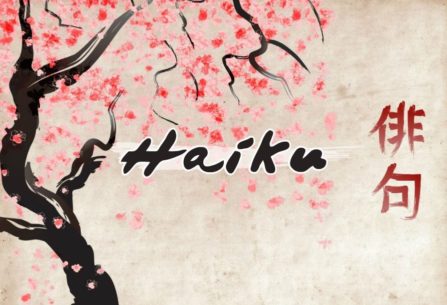
Dunkirk NY – Recently I made the decision to join the Haiku Society of America. I was hesitant to do so for two reasons. One is that I am not much of a joiner. The second is that, when I join organizations, I have the unfortunate tendency to be someone who finds faults within the group. I think this tendency comes from being a lifelong teacher. When you teach, you spend an inordinate amount of time finding and correcting faults and flaws. I always liked to offer positive feedback, and made a point of doing so when warranted. But on the whole, my job consisted of trying to weed out flaws and bad habits in young actors and replace them with more useful and positive techniques.
I already know what makes me hesitant about joining HSA. Its members, from what I can gather from photos and pictures and writings, tends to consist almost exclusively of older, white, well-educated people. There appears to be little diversity within the organization. And, to be as blunt and fair as possible, this description of the overall membership demographic fits me to a “T”, with the only exception being my Puerto Rican heritage. I do not wish to make this appear to be a judgement against the organization, just an observation. I could very well be wrong. But there is little external evidence to the contrary.
It is my misfortune to have come to a place in my life where my sense of my personal spirituality has intersected with the “mindfulness” and “minimalist” movements in modern culture. Since my 20s I have been drawn to eastern thought and philosophy, heavily influenced by my reading of the works of the Catholic Trappist monk Thomas Merton. Merton stands at the apex of the synergy between Catholic mystic tradition and eastern Zen Buddhism tradition. My interest in haiku is, at least in my opinion, a natural outgrowth of this aspect of my life. It’s something I have carried with me for more than 40 years now, not something that has sprung up from the current fads.
This is why I am so hesitant to join and share my haiku with others. I fear that a lifelong interest in eastern/western spirituality will be mistaken for having jumped on recent trends. I’ve actually little doubt that other haiku writers are good people – they are probably fine and wonderful human beings, and not trend followers. It’s also clear that many of them have been writing haiku for much longer than I have, so they are committed to the form and the “lifestyle” (for want of a better word). And haiku writing is not exactly a popularized method even of writing poetry. I’ve read a few anthologies, and there are a few names out there that are considered prominent in this arena. I’ve also read much of the Japanese masters such as Basho and Issa to this point. I’ve even read a small anthology of baseball haiku. So, despite my misgivings, I feel I have to take the jump.
What is most interesting to me is the current state of haiku form. Adapting the Japanese form of haiku to English has apparently been fraught with cultural baggage when it comes to form. There has been much discussion on this point. Essentially speaking, form comes down to a question of the amount of sound in a haiku, whether that sound is called on (in Japanese style) or syllable (English style). As I read about the discussions surrounding this point, it seems to me that the question at this point should be moot. I think what should be discussed more is not how English haiku compares to Japanese haiku, but rather how traditional forms of English poetic style can inform English haiku and work to make it independent of Japanese haiku. In this regard, I think the early sense of English haiku taking on a 5-7-5 format of syllables has more promise than people may think.
In my reading and research, I read this article by Michael Dylan Welch, who appears to be a pretty well-known haiku poet. I wrote this article on Medium in defense of the 5-7-5 format, which I happen to like. Mr. Welch is apparently the one who designated February as National Haiku Writing Month (“because it’s the shortest month”), and he discourages people from writing 5-7-5 haiku. If I participate in NaHaiWriMo, I think I’m going to write a lot of 5-7-5 haiku just to be difficult and different. It’s in my contrarian blood. I’m also going to write a post here at some point detailing a bit more why I think English haiku writing should lean more on English poetic traditions rather than lean on trying to imitate Japanese language style with English. If I am going to join up here, I might as well start on the “wrong” foot.
I should make clear, though, that I may not have time to write a haiku every day. A lot depends on how caring for Mom eventually turns out in February. So if I don’t get a haiku in every day, no big deal. I’ll do what I can, and perhaps here and there post something I’ve written in the past as a substitute for the day. Since I don’t have Facebook, I can’t post to the NaHaiWriMo FB site, but that’s of no matter to me. One does what one can with the moments presented. -twl
Dunkirk NY – Due to dental and doctor appointments I have a small break from taking care of my mother. One of the major things we did get accomplished was getting overnight help for her. This should take off a lot of stress from everyone, as having someone in the house from 10pm-6am will allow people to get a decent amount of sleep. This was really the major issue apart from the stroke-like symptoms. So now she has assisted coverage on an ongoing basis. This could mean that I might be on more of an on-call basis for afternoons and evenings. It might also mean that I’d be living in my parents’ condo in Amherst, which is about a 40-minute drive from my brother in W. Brookfield. That would allow for all of us to have some space instead of being crowded into his house. We are going to give this a try, and perhaps in March I might even be able to come back home for extended spells. The situation is very fluid at the moment, so everyone is sort of playing the hand as it’s dealt. The night aid starts a week from today.
It is somewhat difficult to put into words what it takes to do this kind of work. I find that the physical aspects of it are not so terribly difficult. What does wear on you is the emotional side of it all. While my routine is not all that changed (I still have to find things to do during the day, just in a different location), there is always that Sword of Damacles hanging over your head, in that any minute she might ring her assistance bell, and you have to drop everything and attend to her. Getting good solid sleep is also an issue; you’re always slightly tired. Everything in the house sort of revolves around her needs. Her needs are not that much: a change of undergarment, from bed to chair, from chair to bed, feeding, assistance to the bathroom. Her world is small and getting smaller, but even in that small world she needs help. Her sleep patterns are erratic. All of this impacts your own daily routine. Whatever you’re doing, in the back of your mind there is always the thought that the bell will ring any minute.
I have so many thoughts about the process of aging that my mind is having trouble sorting it all through. I’ve developed a sense of urgency about trying to make sure all my affairs are in order and that my planning for my own aging is as complete as I can make it. And yet, I still know that all the planning in the world can’t account for everything. But I feel I have to have all the backstops in place to handle all the inevitable losses before I can even begin to think about enjoying any gains. As always, the best approach is to take the day you have and do with it whatever needs to be done. Somehow, though, it gets more challenging to stay in the present when you can see the future ahead and even begin to make out the details. -twl
W. Brookfield MA – My life has taken a new turn. My mother’s health has been a concern for the past year or so, and to this date my brother here in MA has been the one seeing to her care. However, it’s now to the point where having just one available caretaker is no longer sustainable. So my wife and I have made the decision to shut down our own house and move in with my brother to offer him some assistance. It is not going to be easy; a week has gone by and already her need for constant attention has taken its toll on sleep.
I don’t intend to offer a blow-by-blow narrative of what she’s up against. Right now the two greatest challenges are her dementia and some mini-strokes she’s been having. Her sense of day and night is almost non-existent, and she has no set discernible schedule. All she wants to do is sleep, and it is hard to get her to do much of any activity. She has clearly slipped into Shakespeare’s seventh and last age – “second childhood and mere oblivion; sans teeth, sans taste, sans eyes, sans everything.”
I suspect I will be a different person at the other end of this. Where the other end is, is impossible to tell at the moment. My mantra has become the Zen mantra of a statement that, every time it’s spoken, it’s true – “This, too, shall pass.” -twl